Couples Therapy
For couples caught in cycles of conflict, disconnection, or rebuilding after betrayal
I can do nothing for you but work on myself. You can do nothing for me but work on yourself.
— Ram Dass
High Conflict Relationships and Emotional Disconnection
There is a Way Through

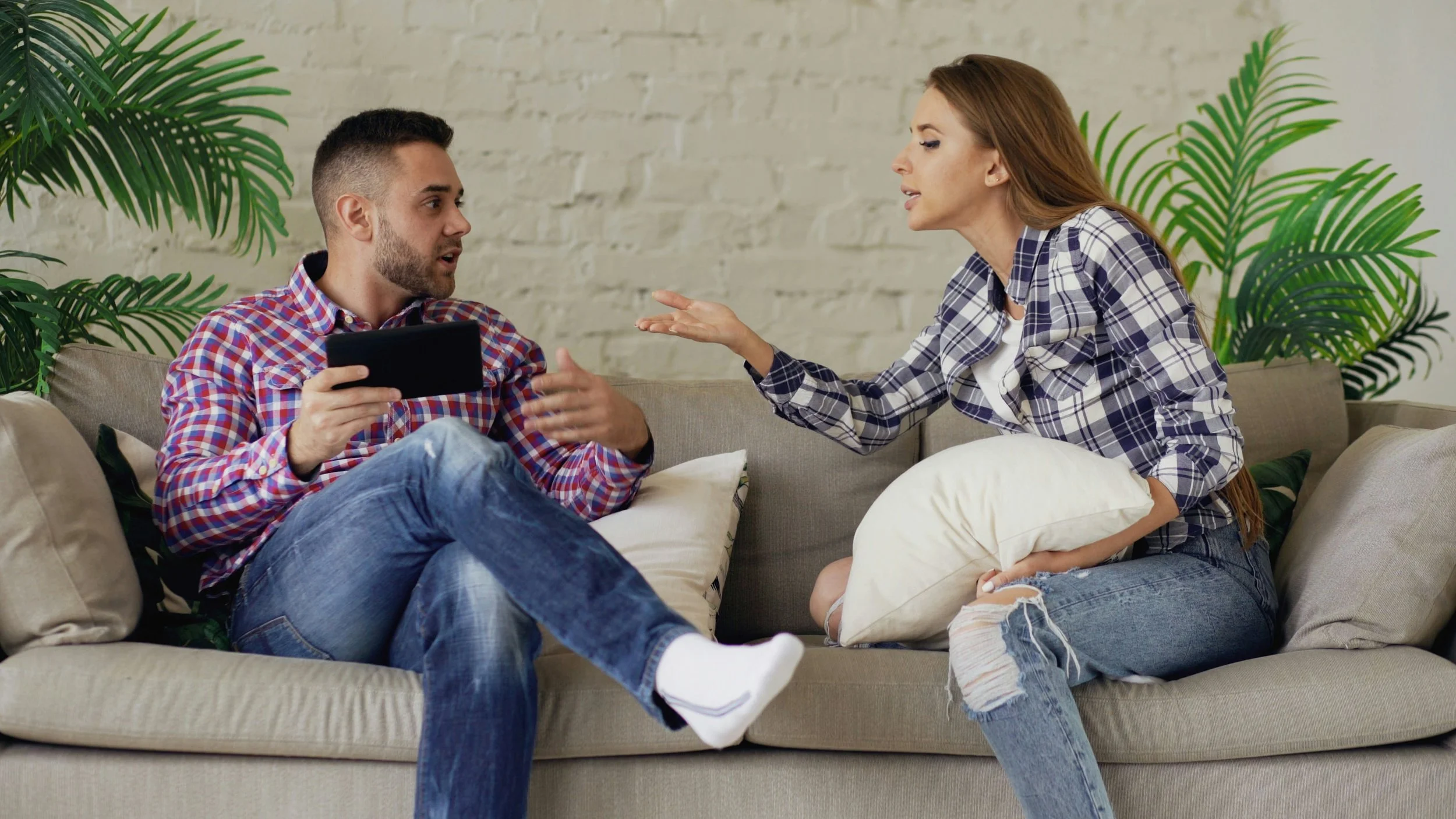
Are you trapped in the same repetitive same fight? Or has the communication stopped entirely?
Have you reached a crossroads where the weight of relationship conflict or betrayal has pushed you to consider separation or divorce?
Relationships naturally ebb and flow, but when your connection falters, and you feel alone or pushed away in a relationship, it can feel like you’ve lost your emotional anchor. Whether your bond has unraveled over time, or stress, arguments, and mismatched values have driven a wedge between you, the experience of being misunderstood or unheard can be exhausting and overwhelming.
You may be asking yourself: Is it too late to repair our relationship? You can give your partnership the support it needs in couples therapy. Counseling for couples supports partners to understand their partner and engage in changing negative patterns of relating.
Relationships Need Care and Attention to Thrive
Maybe you share a life but aren’t really living it together anymore. Your children, careers, or responsibilities might be at the forefront of your life and, as a result, your relationship has slipped down the priority list.
Perhaps the rupture was sudden—a breach of trust, an argument that left scars, or a betrayal that’s shaken the foundation of your relationship. Maybe one of you carries guilt while the other holds pain, and silence has become a form of protection.
Whether you’re stuck in a cycle of conflict or missing the closeness you had, there is a way forward! Couples counseling offers a supportive place to reconnect, repair, and rediscover the strength of your relationship.
Reach Out Today!
Even The Strongest Bond Can Quietly Chip Or Dramatically Explode

Sharing a life together is intensely fulfilling, but even the most loving relationships quest for a balance of two different people’s expectations and relationship styles. Some relationships are also confronted with deep strains from illness, an affair, empty-nesting, or addiction.
Yet many of us hesitate to seek help. According to relationship expert John Gottman, most partners wait an average of six years before reaching out for support. By that time, hurtful dynamics have often taken root, and misunderstandings can become recurring patterns.1
The longer these issues go unaddressed, the more difficult it may feel to find your way back to closeness. Negative patterns become entrenched and narratives about our partner or the relationship itself solidify. Just because you’re struggling doesn’t mean your relationship is broken.
The Relational Mirrors That Lead Towards Secure Attachment
Relationships have a magical ability to bring out intense emotions of love and safety, as well as anger and hurt. In couples counseling, we identify and explore your relationship’s unique negative cycle, using this as a map to understand our partner and ourselves. In identifying the emotions our partner brings out in us, we find a pathway towards our own healing. The gift of this relational therapy is a secure relationship; one where you feel cared for and understood.
Few of us received a map for healthy emotional expression. We enter adult relationships without the understanding and tools for connected, secure partnership. Relationships take work, skills, and a willingness to cultivate communication, conflict resolution, and articulate our needs.
You don’t have to navigate these challenges alone. Marital counseling offers a space where both partners can feel heard and understood, free from judgment or blame. With guidance from a couples counselor and a shared willingness to grow, a renewed sense of partnership is possible.
Couples Therapy Can Help You Rebuild Communication, Trust, and Connection

Even if your relationship feels strained or disconnected, that doesn’t mean it’s beyond repair. As an experienced couples therapist, I offer a warm, neutral, supportive space where you can learn to understand each other, and yourself.
The initial session is dedicated to exploring the concerns that led you to therapy and mapping out the patterns that keep you stuck. I will meet with each of you individually to get a clear picture of your personal history, past relationships, and what you hope for moving forward.
This helps me assess your relationship dynamic and tailor the treatment process to your unique story so we can set goals that feel meaningful for both of you.
Exploring The Patterns of Conflict and Disconnection That Keep You Apart
Underneath repeating patterns of conflict are emotions—like fear, sadness, longing, and unmet needs—that often go unspoken. Together, we’ll slow things down and look at what’s happening beneath the surface of your arguments or silence.
Our process of couples therapy involves naming and attuning to these deeper emotions, instead of reacting from protective patterns. Over time, you’ll see your partner not as an adversary but as someone who’s also struggling to feel safe, loved, or understood.
Through rebuilding trust and sharing vulnerabilities, new pathways for connection begin to form. Along the way, you’ll learn practical relationship tools for healthy communication and decision-making that support your long-term goals as a couple.
Therapeutic Approaches That Foster Real Change
I primarily use Internal Family Systems from the Inside Out (IFIO) to help couples build compassionate awareness of the interplay of each other’s own inner process. It provides clarity of self and your own healing work, as well as increased availability of understanding and communicating in your relationship.
Emotionally Focused Therapy (EFT) – A research-based approach that helps couples identify their negative interaction cycles and create new patterns rooted in emotional safety and responsiveness. Through EFT, you’ll learn how your feelings can be expressed in ways that lead to closeness instead of conflict.
The Psychobiological Approach to Couples Therapy (PACT), A process that combines neuroscience research, attachment theory, and nervous system regulation to support relationships towards secure attachment. This method incorporates somatic awareness and interventions and emotional attunement.
Psychedelic-Assisted Couples Therapy is an approach for couples wishing to go deeper in their therapy journey. If you are ready to open and turn a corner, this approach may be right for you. It offers a unique glimpse into each other’s reactions and pain points, with an increase in capacity and a deepened experience of your own self, your partner, and the relationship itself.
I also draw from the Gottman Method, which focuses on strengthening the friendship at the core of your relationship. It offers concrete tools for resolving conflict, making space for both partners’ needs, and building a shared life filled with meaning and mutual respect.
In relationship therapy, you will learn real-world tools for creating rituals to build harmony and a bridge of trust, empathy, and appreciation for each other.
Whether You’re Feeling like Roommates, Rebuilding after Betrayal, or Long for Emotional Intimacy
Some couples come to therapy after a painful rupture such as betrayal trauma or regrettable words in a high conflict encounter. Many couples don’t arrive in crisis. They arrive in defeated disconnection. Arguments have cycled without resolution and touch has drifted way along with emotional intimacy. Some clients seeking therapy for affair recovery and betrayal trauma are shocked and disoriented. Others have been gradually drifting apart emotionally or physically. Couples therapy offers a place to unpack and explore the roots of relational disconnection and rupture, as well as a roadmap towards a secure and connected relationship.
Frequently Asked Questions
-
These are terms that are often used interchangeably. Couples therapy tends to go deeper into attachment patterns, communication cycles and the emotional dynamics beneath conflict. It is not limited to married couples, and it is more than problem solving.
-
The first session is a joint intake. We will explore what is bringing you to therapy, what your hopes are, and surface the patterns that make you feel stuck. I always like to hear the story of how you met. I view the relationship as my “client” and so want to learn about my client. It also can be helpful for both partners to reflect on their relationship journey. Many couples love to tell the story of how they met, fell in love, so it can serve as a bonding exercise as well.
-
Many couples prefer to begin with weekly sessions and drop down to biweekly as they begin to feel improvement. We can also start biweekly if schedules are a limiting factor, though in that case, it is often helpful to start with 90-minute sessions. Anything less than twice monthly tends to feel so slow that the process won’t have traction to create the real change you are seeking.
-
This is common; according to the research by Dr. John Gottman, the average couple waits six years from when relationship distress begins to seek professional support. At this point patterns are often entrenched and narratives about your partner are well developed. In essence, this is a common question and common experience. As such, it’s not necessarily too late to try, and urgency often creates true urgency to change.
-
Yes, affair recovery is one of my clinical specialties, and I have specific and advanced training to support reattaching and rebuilding after infidelity. It is one of the most possible to heal from, with the correct support.
-
Sometimes couples therapy does stir up old hurts, frustrations, and disappointments. It can be very hard to heal without addressing the pain in the past. PACT therapy can support reconciling a conflict in the moment, and IFIO will support you each to take ownership of your part in relational difficulties, rather than fixating on your partner’s shortcomings.
-
Absolutely. There is a very specific process that supports whether to stay or go, that I can support you through. If you do decide to separate, I will guide you with a helpful process to uncouple logistically, emotionally, and even spiritually if that is wished for.
-
Yes, I offer ketamine and psilocybin therapeutic journeys for couples, which is one of the more uncommon and powerful formats available. Both partners experience a session together with therapeutic support, which can accelerate breakthroughs that might take months in traditional talk therapy, it’s particularly effective for couples where emotional walls, old wounds, or entrenched patterns have been resistant to change.
-
Traditional couples therapy woks through language, nervous system regulation, learning communication tools, and connecting attachment wounds to relational patterns. Psychedelic therapy gents to the core of suffering in a way that talk therapy can’t. For couples it can deepen the relationship, heal emotional wounds, and resolve trauma while partners support each other. It is not a replacement for couples therapy, it is a deepening of it.
You May Still Be Wondering If Couples Therapy Is Right For You...
We aren’t married yet, but I think couples counseling may be beneficial for us.
I love working with couples who are in the first chapters of their relationship journey. Early support helps build healthy foundations before long-term commitment. It’s never too early to create the kind of relationship you want to grow into.
A couples intensive might be too much for us—emotionally and financially.
If you tend to get emotionally overwhelmed when confronted with a lot all at once, you may benefit more from attending weekly couples or marriage counseling instead of a retreat offering concentrated therapy.
Although attending intensive marriage counseling is a financial commitment and requires blocking out a day, a couples intensive could end up being less expensive—and potentially more effective—than long-term couples therapy because you could accomplish a lot in just those few hours.
What if I’m open to counseling, but my partner isn’t?
Some people are uncomfortable discussing personal topics with a stranger or doubt that therapy can help. Others fear they may be blamed for relationship problems. I will never take sides because I want you to make meaningful progress.
However, if your spouse doesn’t want to attend couples counseling, I offer Relationship Therapy for One, which focuses on helping you shift your relationship patterns. Research from the University of Denver shows that this approach can be just as effective as couples therapy when one person is committed to change.(2)
You Can Restore Your Connection And Intimacy
If you want to reduce conflict, improve communication, or rekindle the spark of your relationship, couples therapy can help you build the foundation for a lasting partnership. For a free, 20-minute consultation, please contact me.
1 - https://www.gottman.com/blog/timing-is-everything-when-it-comes-to-marriage-counseling/
2 - https://www.wsj.com/articles/SB10001424052970203458604577263303967929424
Schedule a Free Consultation
Letting someone into the inner world of your relationship relies on working with a therapist you feel comfortable and relaxed with. Reach out to schedule your free 20 minute consultation.